
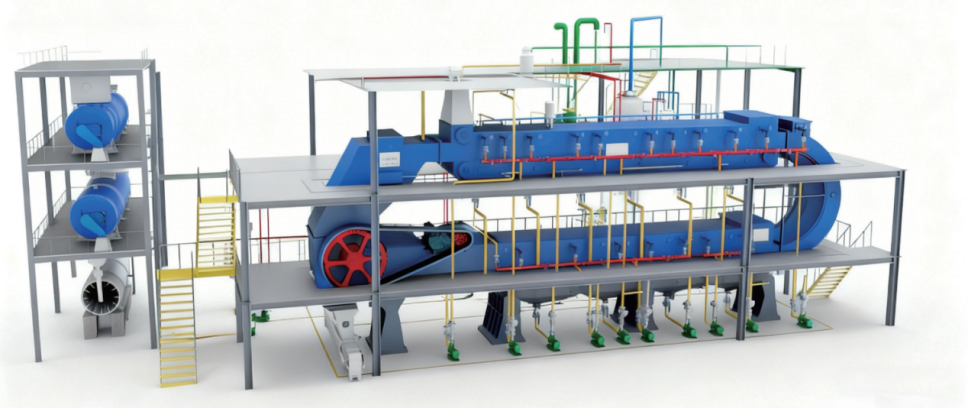
Description
- Technological Process
Oilseed flakes → Continuous Extraction → 1st & 2nd Evaporation → Concentration & Stripping → Crude Extracted Oil; Wet Meal Desolventizing via DTDC; Solvent Condensation + Recovery + Tail Gas Recycling for Circulating Utilization
- Core Technical Advantages
① Sealed equipment with corrosion and high temperature resistance to eliminate solvent leakage
② Suitable for multiple types of oil-bearing raw materials
③ Pumps and reducers from first-tier brands with low failure rate
④ Tail gas absorption system to cut solvent emissions
⑤ Fully automatic control to reduce labor input
⑥ Combined steam and mechanical vacuum evaporation to lower costs and guarantee crude oil quality
- Applicable Capacity Range
10–1000 T/D: Soybean, rapeseed, peanut, cottonseed, sunflower seed, corn germ, castor seed, rice bran, flaxseed, walnut 10–500 T/D: Camellia seed, sesame, safflower seed, tigernut
- Benchmarking Advantages Against Industrial Standards
Steam consumption: 180 kg per ton of material; solvent consumption: 0.6 kg per ton of material; power consumption: 8 kWh per ton of material; water consumption: 0.2 ton per ton of material Meal residual oil: 0.5%; residual solvent in crude oil: 50 ppm Merits: low water consumption, low power consumption, low solvent loss, low steam consumption, low residual oil in meal, low residual solvent in oil


