
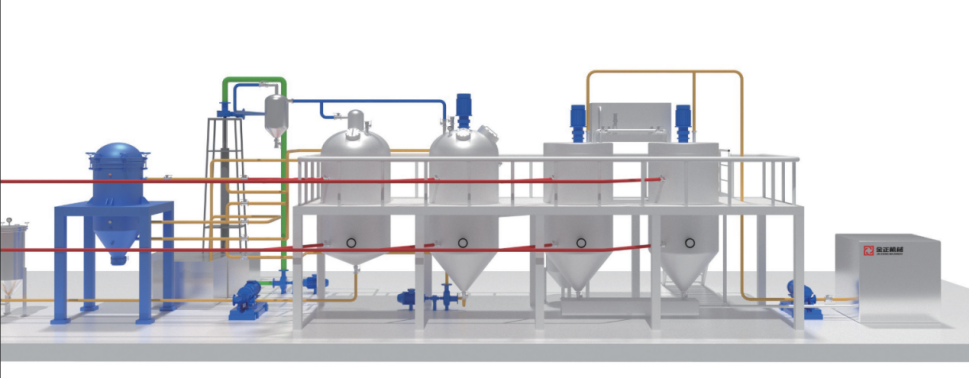
Description
- Technological Process
Degumming & Neutralization Section (Centrifuge) → Decolorization Section (Decolorizing Tower) → Deodorization Section (Deodorizing Tower) → Dewaxing & Degreasing Section (Crystallization and Ripening Tank) → Finished Oil Filling
- Core Technical Advantages
① Customized differentiated refining processes tailored to diverse production demands;
② Waste heat recovery system that significantly cuts steam consumption and operational costs;
③ High oil yield, superior oil quality indicators and low auxiliary material consumption;
④ Full computer automatic control with waste heat recycling for energy conservation;
⑤ Eliminates peculiar odor generated in decolorization process, fully complying with environmental protection standards;
⑥ Refrigeration and vacuum system reduces steam consumption and wastewater discharge.
- Applicable Capacity Range
1–500 T/D: Soybean oil, peanut oil, camellia oil, sunflower oil, cottonseed oil, castor oil
1–300 T/D: Rapeseed oil, rice bran oil, flaxseed oil, corn germ oil, sesame oil
- Benchmarking Advantages Against Industry Standards
Steam consumption ≤ 50 kg per ton of crude oil; Bleaching clay consumption: 5–15 kg per ton of crude oil; Power consumption ≤ 16 kWh per ton of crude oil; Phosphoric acid consumption: 0.5–1.0 kg per ton of crude oil; Natural gas consumption: 2.5 m³ per ton of crude oil;
Oil content in waste bleaching clay ≤ 22%.
Core strengths: low consumption of bleaching clay, natural gas and phosphoric acid, low power consumption, and low oil residue in waste bleaching clay.


